Three hundred bridges, give or take
Nobody agrees on the count — it depends where you stop the city and whether a culvert with railings qualifies — but the usual figure is somewhere above three hundred. The famous ones lift for ships. My favourites are the small ones nobody photographs.
The drawbridges at night
From roughly April to November, while the river is free of ice, the big Neva bridges are raised in the small hours so that cargo ships can pass between the Gulf and the inland waterways. It is a working timetable, not a show, which is exactly why it is worth watching. The roadway splits, the two halves rise with their lamps still lit and tilting, and a queue of long low ships slides through in the dark with a red light on one side and a green on the other.
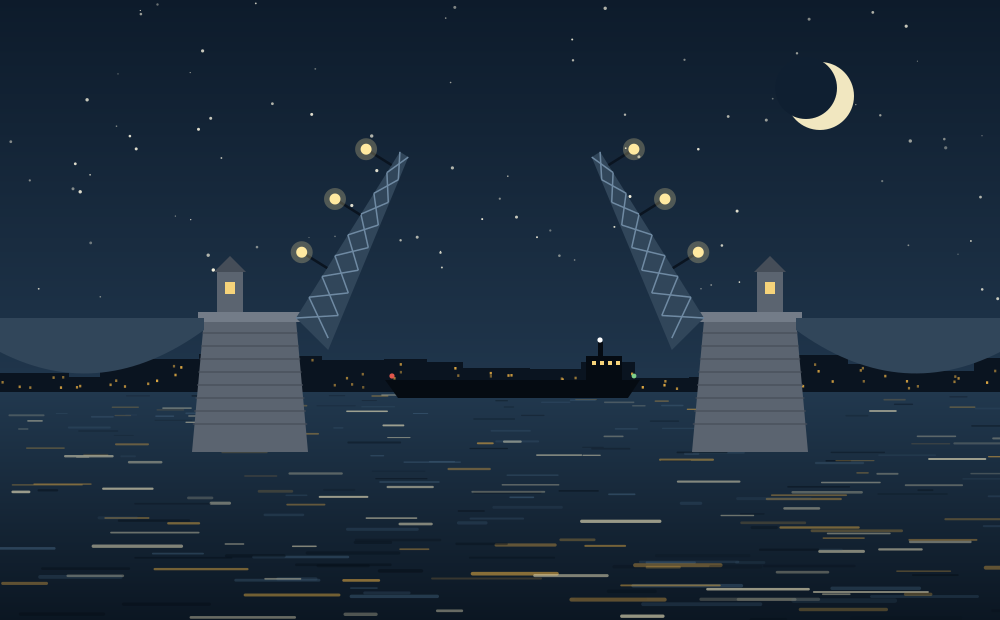
Palace Bridge is the classic view and usually lifts a little after one in the morning. The practical point is this: while the bridges are up, the islands are cut off from each other for several hours. Decide which bank your bed is on before you settle in to watch, and stand on that one. Times shift from season to season and bridges close for repair, so check the current timetable on the day rather than trusting any website, this one included.
Six small bridges
- Bank BridgeA footbridge on the Griboedov Canal, hung from the mouths of four griffins with gilded wings. Barely wider than two people. Go early; by noon there is a queue to touch a paw.
- Lion BridgeIts quieter cousin a few bends downstream: four white lions, the same engineer’s trick, a tenth of the visitors.
- Anichkov BridgeCarries Nevsky Prospekt over the Fontanka. Walk round all four horse-tamer groups in order; together they tell one story of a horse being caught.
- Blue BridgeNearly a hundred metres wide, which makes it less a bridge than a square that happens to have a river under it. The joke is to ask a friend to find it.
- Lomonosov BridgeFour granite pavilions with domed tops and heavy chains between them. It once opened in the middle for masted boats, and the towers held the machinery.
- Kissing BridgeOn the Moika. The name comes from a tavern keeper’s surname, not from anything romantic, but nobody lets that spoil it.
How to look at a bridge
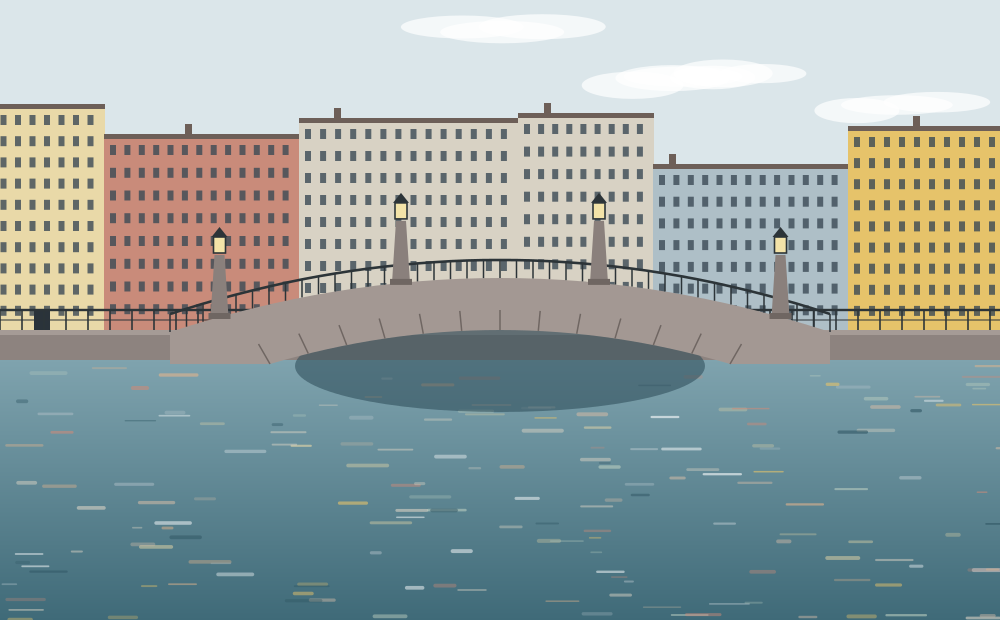
Three habits have served me well. Go underneath if there is a landing stage or a set of steps to the water; the vaulting is often finer than the deck. Read the railings: each waterway has its own cast-iron pattern, and after a week you can tell the Moika from the Fontanka by the fence alone. And slow down in the middle, where the view opens both ways and the granite underfoot has been worn into a shallow dish by two centuries of people doing exactly the same thing.
One more, for winter. When the canals freeze, the bridges turn into balconies over a white street. Footprints appear on the ice below within a day — ducks first, then dogs, then a brave line of human ones that I admire and do not copy.
The walks in Routes pass every bridge named on this page except the Bank Bridge, which is five minutes from Nevsky Prospekt and easy to add.